
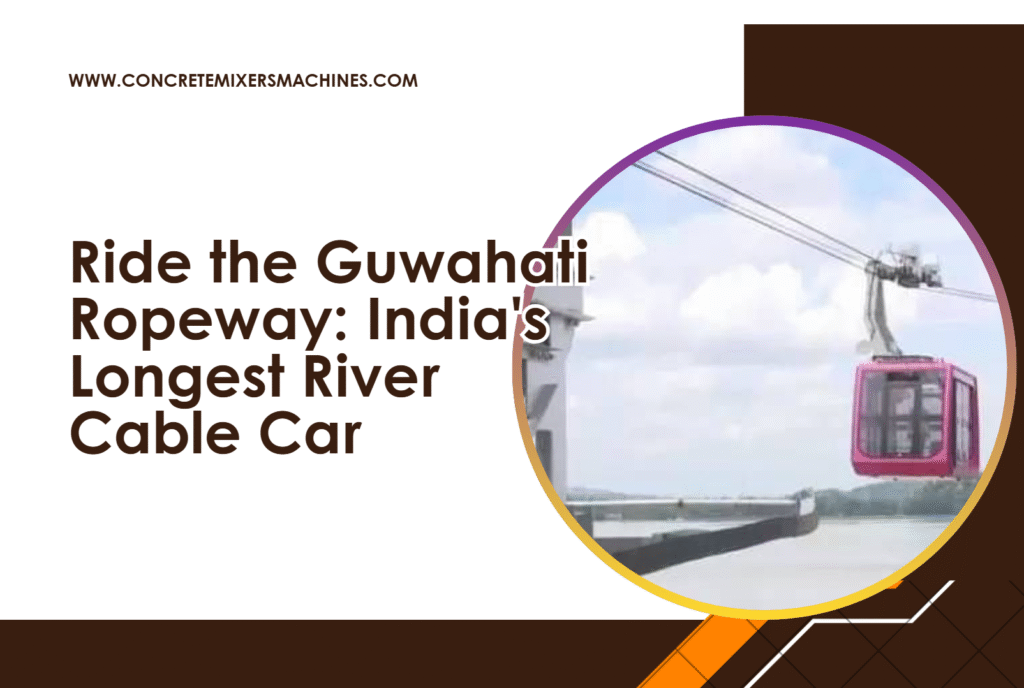
From the engineering challenges of spanning 1.82 km over the Brahmaputra to the booming construction projects reshaping Guwahati — explore the full story of the Guwahati Ropeway and the infrastructure boom driving it.
Guwahati Is Building Its Future — One Pillar at a Time
When most people think about the Guwahati Ropeway, they picture a scenic cable car ride over the Brahmaputra River. And that is certainly a breathtaking experience. But behind that 10-minute aerial journey lies an extraordinary story of civil engineering, infrastructure planning, and construction execution that transformed a visionary idea into a functioning landmark.
For anyone involved in construction, building materials, or heavy infrastructure in the Northeast — this story matters deeply. Guwahati is undergoing one of the most significant construction booms in its history, and the ropeway is just the beginning.
What is the Guwahati Ropeway?
The Guwahati Passenger Ropeway is a cable car infrastructure project connecting the southern bank of the Brahmaputra at Panbazar to North Guwahati. Spanning 1.82 kilometres, it holds the distinction of being India’s longest river ropeway. It is operated on behalf of the Guwahati Metropolitan Development Authority (GMDA) by Usha Breco Limited.
The foundation stone was laid in December 2009. The project faced delays due to ASI objections but was finally inaugurated in August 2020 — over a decade in the making. Today it stands as a proud example of what persistent infrastructure investment in Guwahati can achieve.
The Construction Story: How the Guwahati Ropeway Was Built
Building a ropeway over one of Asia’s mightiest rivers is not a simple task. The Guwahati Ropeway required extensive civil and structural engineering work before a single cable was strung across the Brahmaputra. Here is a look at what went into building this landmark.
Foundation & Pillar Construction
The ropeway is supported by 5 main pillars standing over the Brahmaputra River and its banks. Constructing these pillars required deep foundation work in challenging riverbed conditions — working with shifting sand, seasonal flooding, and strong currents. The foundations had to be engineered to withstand not just the cable tension loads but also the seismic activity common to the Northeast region.
This kind of large-scale concrete work is the backbone of infrastructure projects across Assam. High-volume, consistent concrete mixing is non-negotiable — small inconsistencies in mix ratios in foundation work can compromise structural integrity for decades. Equipment like heavy-duty concrete mixers plays a critical role in ensuring the right mix quality at scale, especially on remote or riverbank construction sites where ready-mix supply is not always reliable.
Terminal Building Construction
Both the Panbazar (South) and North Guwahati terminals required substantial civil construction — reinforced concrete structures designed to handle heavy passenger footfall, mechanical loads from the cable systems, and the environmental stresses of a riverside location. The terminal buildings also house the mechanical and electrical infrastructure that drives the ropeway system.
Construction of these kinds of facilities involves large volumes of RCC (Reinforced Cement Concrete) work, formwork, and structural concreting — all areas where reliable mixing equipment and quality building machinery make a measurable difference to project timelines and output quality.
Why Northeast Construction Projects Demand Better Equipment
Construction in Northeast India comes with unique challenges: difficult terrain, extreme monsoons, limited road access to many sites, and the need for robust equipment that can operate reliably in variable conditions. This is precisely why contractors and builders in Guwahati and across Assam have increasingly turned to locally available, high-quality construction machinery suppliers who understand the regional context.
Lotus Traders — concretemixersmachines.com — has been serving the construction industry in Guwahati since 2009, the same year the Guwahati Ropeway project was first conceptualized. With over 15 years of experience manufacturing and trading equipment used in building construction, Lotus Traders understands what builders in Northeast India actually need on the ground.
Guwahati Ropeway: Key Facts at a Glance
- Total Length: 1.82 km — India’s longest river ropeway
- Route: Panbazar (South Guwahati) ↔ North Guwahati
- Ride Duration: ~10 minutes one way
- Structural Support: 5 pillars spanning the Brahmaputra
- Operator: GMDA / Usha Breco Limited
- Inaugurated: August 2020
- Project Inception: December 2009 (11 years in the making)
- Cabin Capacity: Up to 20 passengers per cabin
- Google Rating: 4.4/5 (6,500+ reviews)
Guwahati Ropeway Timings & Ticket Price (2026)
For visitors planning a trip, here is a quick reference guide:
- Operating Hours: 8:30 AM to 4:30 PM
- Lunch Break: 1:00 PM – 1:30 PM (closed)
- Closed: Every 2nd and 4th Thursday of the month
- One-Way Ticket (Indian Adult): ₹100
- Round-Trip Ticket (Indian Adult): ₹200
- Foreign National (One-Way): ₹200
- Children below 3 years: Free | Specially Abled Persons: Free
Location: The South Terminal is located at Nehru Park, Panbazar, Guwahati. You can find it easily on Google Maps.
The Guwahati Ropeway Project 2026: What’s Being Built Next?
If one ropeway could transform Guwahati’s tourism and transit landscape, imagine what three more will do. Guwahati is on the brink of a significant ropeway construction expansion — and behind every one of these projects is a massive demand for construction materials, machinery, and skilled contractors.
1. Kamakhya Ropeway — ₹201 Crore Project
The most eagerly awaited new project is the Kamakhya Ropeway, connecting Kamakhya Railway Station to the hilltop Kamakhya Temple — a distance of 1.43 km. Developed by the National Highways Logistics Management Limited (NHLML), a subsidiary of NHAI, at a cost of ₹201.52 crore, construction is set to begin under the DBFOT model.
This project will involve significant civil construction work — hillside foundation drilling, concrete pillar installation on Nilachal Hill’s steep terrain, and terminal building construction. Projects of this kind create a cascading demand for construction equipment across the supply chain — from concrete mixers and hoists to vibrators and batching plants.
2. Khanapara to Airport Ropeway — 24 km Urban Mega-Project
The Government of India’s Parvatmala Pariyojana has proposed a 24-km ropeway corridor from Khanapara to Lokpriya Gopinath Bordoloi International Airport. If executed, this would be one of the longest urban ropeways in the country and a generational infrastructure project for Guwahati.
The scale of civil and structural work involved would be enormous — dozens of pillar foundations across diverse urban terrain, multiple terminal buildings, and associated infrastructure. You can read more about Northeast ropeway proposals from Sentinel Assam’s coverage.
3. Overall Guwahati Infrastructure Boom
Beyond ropeways, Guwahati is experiencing a broad construction surge — new flyovers, elevated roads, real estate developments, the Smart City mission, river embankment projects, and expanding residential construction. All of these projects require quality construction equipment and reliable suppliers on the ground.
This is exactly where locally established companies with deep roots in the Guwahati construction ecosystem — like Lotus Traders — provide irreplaceable value. Being present since 2009 means understanding the market, the terrain, and the needs of Northeast contractors better than any distant supplier can.
Construction Equipment That Powers Projects Like the Guwahati Ropeway
Large-scale infrastructure projects like the Guwahati Ropeway and the upcoming Kamakhya Ropeway rely on a range of heavy construction machinery to deliver results on time and within budget. Here are the key equipment categories that are essential to these builds:
Concrete Mixers
From pillar foundations to terminal buildings, concrete is the backbone of ropeway infrastructure. Concrete mixer machines ensure a consistent, high-quality mix that meets structural specifications — especially critical in riverbank and hillside construction where environmental conditions are demanding. Lotus Traders specialises in manufacturing concrete mixers that are built for the tough conditions of Northeast Indian construction sites.
Vibrators & Compactors
Concrete vibrators are essential for removing air bubbles from poured concrete, especially in reinforced pillar and slab work. Proper compaction directly affects the structural longevity of any RCC structure — a non-negotiable standard for infrastructure meant to last decades.
Hoists & Material Lifts
On elevated construction sites — hillsides like Nilachal or high-rise terminal buildings — material hoists and construction lifts dramatically improve site efficiency and worker safety. These are standard equipment in any serious infrastructure construction kit.
Bar Bending & Cutting Machines
Ropeway pillar and terminal construction involves significant steel reinforcement work. Bar bending and cutting machines speed up rebar preparation, improve accuracy, and reduce labour time — directly impacting project timelines.
Looking for reliable construction equipment in Guwahati? Explore the full range at concretemixersmachines.com — manufactured and supplied by Lotus Traders, pioneers in construction machinery in Northeast India since 2009.
Why Guwahati is Becoming Northeast India’s Construction Hub
Guwahati’s rapid urbanisation is not happening by accident. The city is the gateway to the entire Northeast, and the central and state governments have identified it as a priority hub for infrastructure investment. Key drivers include:
- Act East Policy: India’s push to develop the Northeast as a gateway to Southeast Asia is driving road, rail, and urban infrastructure investment.
- Smart Cities Mission: Guwahati’s inclusion in the Smart Cities Mission is funding a range of urban infrastructure projects.
- Real Estate Boom: Rising population and in-migration are fueling residential and commercial construction across the city.
- Tourism Infrastructure: Projects like the ropeway, Kamakhya Temple development, and riverfront beautification are attracting tourism investment.
- Central Government Funding: Parvatmala Pariyojana, PMGSY, and other national schemes are channeling billions into Northeast infrastructure.
For construction equipment manufacturers and suppliers, this adds up to a sustained, multi-year demand cycle. The construction boom in Guwahati is not a spike — it is a structural shift in how the city and the region are being built.
Conclusion: The Guwahati Ropeway Is More Than a Ride — It’s a Blueprint
The Guwahati Ropeway is a remarkable story of vision, persistence, and engineering achievement. What started as a concept in 2009 became a functioning landmark in 2020 — and it has since sparked a wave of new ropeway and infrastructure projects that will reshape Guwahati for generations.
For the construction industry, these projects represent enormous opportunity. Every pillar, every terminal building, every metre of foundation work requires quality materials, reliable equipment, and experienced local partners who understand Northeast India’s unique construction landscape.
At Lotus Traders — concretemixersmachines.com, we have been part of Guwahati’s construction story since 2009. As one of the pioneers in manufacturing and trading construction equipment in the Northeast, we are proud to support the builders and contractors who are turning projects like the Guwahati Ropeway — and everything that comes after — into reality.