

Every April, Assam transforms. The air fills with the rhythmic beat of the dhol, the fragrance of freshly bloomed kopouphul (foxtail orchids), and the joyful sounds of Bihu songs echoing across the Brahmaputra valley. This is Rongali Bihu — the most beloved festival of Assam, the celebration of a new year, new harvests, and a new beginning for every Assamese family.
In 2026, Rongali Bihu promises to be bigger, more vibrant, and more culturally rich than ever. Whether you are an Assamese living in Guwahati or anywhere in the world, or a traveler curious about one of India’s most spectacular spring festivals, this complete guide covers everything you need to know about Rongali Bihu 2026 — dates, rituals, food, music, and more.
When Is Rongali Bihu 2026?
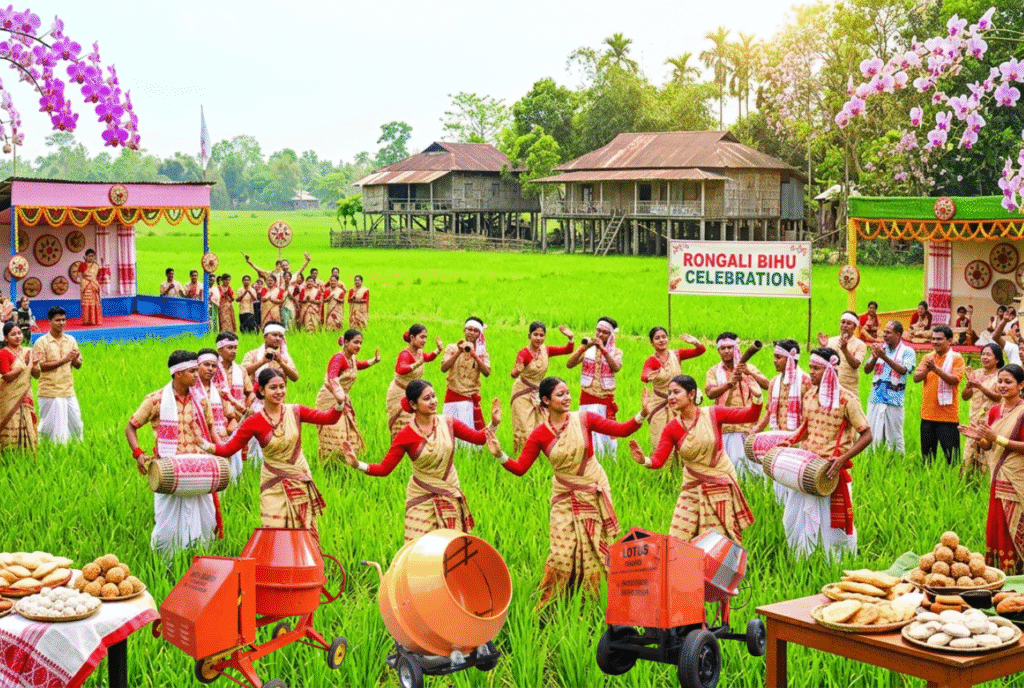
Rongali Bihu 2026 falls on April 14, 2026, with the full seven-day celebration running from April 14 to April 20, 2026. It marks the Assamese New Year and the arrival of the spring sowing season. The festival is officially recognized as a public holiday in Assam and also observed in neighboring Arunachal Pradesh.
Also called Bohag Bihu, this is the most festive of the three Bihu festivals celebrated across the year — the others being Kongali Bihu in October and Bhogali Bihu in January. Rongali Bihu is the national festival of Assam, a land celebrated for its tea gardens, ancient temples, the mighty Brahmaputra river, and its enduring cultural heritage.
What Does Rongali Bihu Mean?
The word “Rongali” comes from “Rong” — meaning happiness, colour, and joy in Assamese. The festival is a celebration of everything that makes life beautiful: community, gratitude, nature, and new beginnings. Its roots trace back to pre-Aryan agrarian communities, making it one of the oldest continuously observed festivals in northeastern India.
According to Wikipedia’s documentation of Bohag Bihu, the festival has been celebrated across diverse native communities of Assam for centuries, transcending ethnic and religious backgrounds as a unifying cultural force.
The Seven Days of Rongali Bihu 2026: A Day-by-Day Guide
Rongali Bihu is not a single-day event — it unfolds across seven meaningful phases, each with its own rituals and significance:
Day 1 – Goru Bihu (April 14)
The festival begins with Goru Bihu, an agricultural thanksgiving ritual. Cattle — the backbone of Assamese farming — are bathed in the river, fed green vegetables and special pithas (rice cakes), and blessed with prayers. This is a heartfelt expression of gratitude to the animals that sustain the farming cycle.
Day 2 – Manuh Bihu (April 15)
The social heart of Rongali Bihu. People bathe with turmeric paste, dress in new traditional clothes, and seek blessings from elders. The Gamusa — a handwoven cotton cloth carrying deep cultural symbolism — is gifted as a mark of love and respect. Families share a festive breakfast of sticky rice, curd, and jaggery.
Day 3 – Kutum Bihu (April 16)
A day dedicated to kinship. Families visit relatives and friends, sharing meals, stories, and laughter. Community feasts reinforce the bonds that make Assamese society warm and connected.
Day 4 – Mela Bihu (April 17–18)
Cultural fairs called Bihutoli or Bihu Mela come alive across Assam. Open-field competitions, Husori performances, traditional Bihu dance events, and celebrity artist concerts light up the state. Guwahati’s iconic venues like Judges Field and Latasil Ground host grand performances.
Day 5–7 – Remaining Bihus & Sera Bihu (April 19–20)
The final days include Raati Bihu, the traditional night celebration under ancient trees, and Sera Bihu (also called Bohagi Bidai) — a farewell to festivities filled with future resolutions, sweet sharing, and quiet reflection.
The Soul of Rongali Bihu: Dance, Music & Tradition
No description of Rongali Bihu is complete without its iconic Bihu dance. Young men and women in traditional Muga silk attire — women in Mekhela Chador adorned with kopouphul in their hair, men in dhoti and Bihuwan — perform brisk, high-energy dances to the thunderous rhythm of the dhol (drum), pepa (buffalo horn flute), and gogona (jaw harp).
These performances, rooted in centuries-old tradition, are now broadcast globally through digital platforms. Bihu dance competitions and cultural programs are expected to draw thousands of participants across Assam and Assamese communities worldwide in 2026.
Traditional Rongali Bihu Food You Must Try
Rongali Bihu is as much a food festival as it is a cultural one. Traditional Assamese households prepare these must-try delicacies during the celebrations:
- Til Pitha — Sweet sesame rice rolls, crispy on the outside and soft within
- Narikal Pitha — Coconut-stuffed rice cakes, a festive favourite
- Tekeli Pitha — Steamed rice cakes made in an earthen pot
- Laru — Sweet balls made of coconut or sesame seeds
- 101 Herbs Dish (Khar) — A traditional recipe made from forest herbs believed to boost immunity
- Chira and Doi — Flattened rice with curd and jaggery, the classic Bihu breakfast
These foods are not just delicious — they represent a living connection to Assam’s agricultural heritage and the natural bounty of the region.
Rongali Bihu 2026 Across Assam: Where to Celebrate
From the bustling city of Guwahati to remote river-island villages, Rongali Bihu 2026 will be celebrated everywhere. Key celebration hotspots include:
- Guwahati — Judges Field, Latasil Ground, and multiple Bihutoli venues hosting grand cultural fairs
- Majuli Island — UNESCO-recognized river island with deeply traditional Bihu celebrations
- Jorhat, Dibrugarh & Sivsagar — Cultural heartlands of upper Assam with authentic festive events
- Kaziranga Region — Bihu combined with wildlife tourism for a unique experience
For those based in Guwahati — the commercial and cultural capital of Assam — the city comes alive with energy. And it is no coincidence that Guwahati is also home to businesses like Concrete Mixers Machines by Lotus Traders, a pioneer in construction equipment since 2009. Just as Rongali Bihu marks new beginnings for families and communities, the construction season that follows the festival marks new beginnings for builders, contractors, and infrastructure projects across the Northeast.
Rongali Bihu and the Construction Boom in Assam
There is a natural rhythm to life in Assam, and Rongali Bihu marks the turning point — after the festival, the warmer months signal the beginning of the active construction season across the state. Roads, bridges, housing projects, and commercial developments all gather momentum as the new year begins.
For contractors and builders across Guwahati and northeast India, this is the time to gear up. Whether you are working on a residential project or a large infrastructure development, having the right equipment matters. Concrete Mixers Machines (Lotus Traders), Assam’s leading manufacturer and trader of concrete mixers and construction equipment, has been supporting builders since 2009 — helping turn the promise of a new Assamese year into real, lasting structures on the ground.
Rongali Bihu 2026: A Global Celebration
In 2026, Rongali Bihu is no longer just an Assam event — it is a global celebration of Assamese identity. Assamese communities in Delhi, Mumbai, Bangalore, the United States, the United Kingdom, and beyond will organize their own Bihu events, keeping the flame of tradition alive across continents.
Social media platforms will carry live Bihu dance videos, Bihu Geet performances, and virtual celebrations. The festival’s reach grows every year, bringing the warmth of Assam to every corner of the world.
How to Celebrate Rongali Bihu 2026 Wherever You Are
Whether you are in Assam or miles away, here are meaningful ways to mark Rongali Bihu 2026:
- Wear traditional attire — Put on Mekhela Chador or dhoti and gamosa to honor the occasion
- Cook a Bihu feast — Prepare til pitha, narikal pitha, and chira-doi at home
- Listen to Bihu Geet — Stream traditional and modern Bihu music on your favorite app
- Gift a Gamusa — Send or gift this handwoven cloth as a symbol of respect and love
- Join a Bihu event — Attend local Assamese community programs or watch live streams online
- Share on social media — Use #RongaliBihu2026 and #BohagBihu to connect with the global Assamese community
The Deeper Meaning of Rongali Bihu 2026
Rongali Bihu is more than a festival — it is a philosophy of life. It teaches gratitude for the land, respect for elders, love for community, and hope for the future. In a world that moves faster every year, Bihu slows us down and reminds us what truly matters: family, roots, and celebration of nature.
Bohag Bihu is the national festival of Assam — a state famed for its tea gardens, green forests, and the timeless Brahmaputra river. In 2026, Rongali Bihu stands as a reminder that amid all development and change, culture and tradition remain the strongest foundations.
Frequently Asked Questions (FAQ)
Q1. What is the date of Rongali Bihu 2026?
Rongali Bihu 2026 begins on April 14, 2026, and the main celebrations continue through April 20, 2026, spanning seven days of festivities across Assam.
Q2. What is Rongali Bihu also known as?
Rongali Bihu is also called Bohag Bihu. The word ‘Rongali’ comes from ‘Rong,’ meaning joy and colour in Assamese. It marks the Assamese New Year and the beginning of the sowing season.
Q3. How many types of Bihu are celebrated in Assam?
Assam celebrates three Bihu festivals throughout the year: Rongali Bihu (April/spring), Kongali Bihu (October/autumn), and Bhogali Bihu or Magh Bihu (January/post-harvest). Of the three, Rongali Bihu is the most festive and widely celebrated.
Q4. What is the traditional dance of Rongali Bihu?
The Bihu dance is the iconic folk dance associated with Rongali Bihu. It is performed by young men and women in traditional Assamese attire to the rhythmic beats of the dhol (drum), pepa (buffalo horn flute), and gogona (jaw harp).
Q5. What foods are prepared during Rongali Bihu?
Traditional Rongali Bihu foods include til pitha, narikal pitha, tekeli pitha, laru (sweet balls), a 101-herb dish, and chira-doi (flattened rice with curd and jaggery). These delicacies are shared with family and neighbors as a sign of warmth and celebration.
Q6. What is the significance of the Gamusa during Bihu?
The Gamusa is a handwoven white cotton cloth with red borders that holds deep cultural significance in Assam. During Rongali Bihu, it is presented to elders as a mark of respect and affection, and is also used in cultural ceremonies and by Bihu dancers.
Q7. Is Rongali Bihu celebrated outside Assam?
Yes, Assamese communities across India and the world — in cities like Delhi, Mumbai, and internationally in the USA, UK, and beyond — organize Bihu events to celebrate their cultural identity. In 2026, digital platforms are expected to bring Bihu celebrations to a truly global audience.
Q8. Why does Rongali Bihu matter for businesses in Assam?
Rongali Bihu marks the beginning of the active economic season in Assam. For industries including construction, agriculture, and retail, the post-Bihu period represents a fresh start. Companies like Concrete Mixers Machines by Lotus Traders, a pioneer in construction equipment manufacturing in Guwahati since 2009, see this period as the launch of the construction season — a time when builders gear up for new projects across the northeast.